Influencer marketing · November 1, 2026 · 7 min read
Muslim Creators Versus Mainstream Influencers
Muslim creators versus mainstream influencers: choose cultural fit, brand safety, and reach for halal campaigns built to convert in key Western markets.
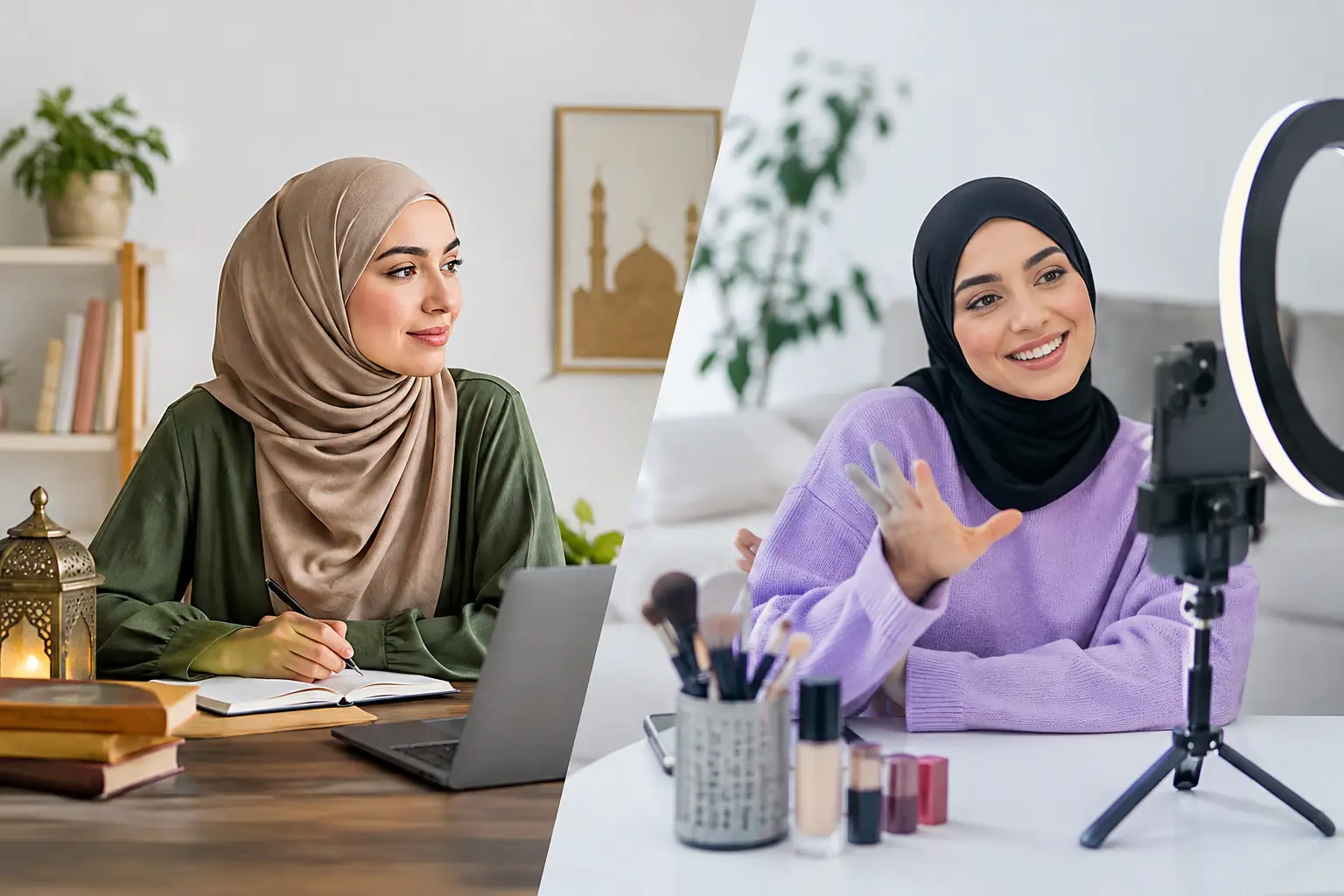
A mainstream creator can have a large audience, polished production, and strong engagement - then make your halal brand feel like an awkward sponsor break. That is the real distinction in Muslim creators versus mainstream influencers. The question is not who has more followers. It is who can make your product believable to the people you need to reach.
For halal brands selling to Muslims in the United States, Canada, the United Kingdom, and beyond, creator fit is part of campaign performance. It affects the comments, the saves, the conversion rate, and whether customers see the partnership as a genuine recommendation or a borrowed audience.
Muslim Creators Versus Mainstream Influencers: The Real Difference
Mainstream influencers are not a category to dismiss. The right one can introduce a Muslim-owned or halal product to new customers, especially when the product solves a broad problem. A halal-certified snack, fragrance-free personal-care item, or family product may have appeal far beyond Muslim consumers.
But broad appeal does not automatically make broad creator selection the best choice. Muslim audiences are not simply a demographic layer added to a general campaign. They are communities with shared reference points, practical needs, religious boundaries, and a sharp sense for whether a brand understands them.
A Muslim creator may know why an alcohol-adjacent setting, a Ramadan post published at the wrong time, or vague halal language can undermine an otherwise solid campaign. They may understand how to show a modest-fashion item without treating modesty as a costume, how to discuss Islamic finance without making claims that create trust issues, or how to feature a food product without leaving ingredient questions unanswered.
That familiarity changes the work before the content is even made. The brief is clearer. Fewer revisions are needed. The creator is less likely to put the brand beside content, imagery, or language that conflicts with its values. And the audience does not need a long explanation for why the partnership makes sense.
Reach Is Not the Same as Relevance
A creator with 500,000 followers can still be the less efficient buy if only a small portion of those followers are likely to care about your offer. A Muslim parenting creator with 35,000 engaged followers may generate more qualified traffic for a halal baby-food brand than a general lifestyle account ten times the size.
This is where teams often get distracted by audience size. Reach is easy to report. Relevance requires judgment.
Start with the commercial question: who is most likely to buy, not merely watch? If you sell modest activewear, a Muslim fitness or modest-fashion creator may already be speaking to women who recognize the problem your product solves. If you run an Islamic education app, a creator known for practical faith, family, or learning content can explain its value in the language parents already use.
That does not mean every campaign needs a faith-centered creator. A Muslim beauty creator may be the stronger choice for halal cosmetics. A comedian may be effective for an Eid gifting push. A food creator may carry the campaign for a halal pantry brand. The point is audience context. Choose a creator because their content and community make the product easier to trust.
Cultural Fluency Protects More Than Your Brand Image
Brand safety is often discussed as a platform problem: profanity, political controversy, fake followers, or unpredictable behavior. Those checks matter. For halal brands, brand safety is wider than that.
It includes whether a creator understands what cannot be shown beside the product. It includes music, dress, food, holiday references, family dynamics, religious language, and the claims made on camera. It also includes timing. A campaign during Ramadan, Eid, or a period of community grief needs more awareness than simply switching the visual theme.
A creator does not need to represent every Muslim experience to be a good fit. Muslim audiences are diverse in culture, practice, age, and priorities. Trying to treat them as one audience will flatten the campaign and often produce generic content.
The practical goal is more specific: work with creators who understand their own audience and can spot a mismatch before it goes live. That is far more useful than asking a creator with no connection to the community to memorize a list of rules.
For a founder, this reduces risk and saves time. You should not have to explain basic cultural context in every outreach message or discover a problem after content has been filmed. A qualified Muslim creator brings useful judgment to the partnership, not just distribution.
When Mainstream Influencers Are the Better Choice
There are cases where mainstream creators belong in the mix. A halal skincare brand expanding beyond its core Muslim customer base may want general beauty creators alongside Muslim beauty creators. A travel product, home good, or wellness brand may perform well with a broader lifestyle audience if its value proposition is clear and the creator's content is compatible with the brand.
The mistake is treating this as an either-or decision. The stronger approach is often a layered campaign.
Use Muslim creators to establish credibility, answer the details that matter to halal-conscious buyers, and create content that feels native to the community. Use carefully selected mainstream creators to test new customer segments or extend reach once the message is proven. Each group has a different job.
That division also helps with measurement. Do not judge both creator types by the same single metric. A mainstream awareness post may earn efficient impressions. A Muslim creator's smaller post may bring stronger saves, higher site conversion, more product questions, or repeat customers. Track what each partnership was meant to do before deciding which one “won.”
The Cost of Getting Fit Wrong
Poor creator fit rarely fails in a dramatic way. More often, it produces content that looks fine and does very little.
The post receives views but no useful comments. The audience asks whether the product is actually halal because the creator does not address it. A script sounds like marketing copy rather than a personal recommendation. Or the content lands during a key Islamic moment with no awareness of what the audience is focused on.
These outcomes waste more than a creator fee. They waste product samples, internal review time, paid amplification budget, and a chance to make a good first impression with a valuable audience.
A better campaign begins with a brief that leaves room for creator judgment. State the product, the non-negotiable claims, the target customer, the deliverables, and any religious or cultural boundaries. Then choose people who do not need to be taught why those boundaries exist.
Be direct about the campaign goal as well. Is it sales, product education, email signups, app installs, or Ramadan gifting awareness? “Post about our brand” is not a brief. “Show busy Muslim parents how this product solves a specific problem, with a tracked offer” gives the creator something useful to build around.
How to Build a Better Creator Mix
A practical creator plan starts with fit, then adds scale. Review the creator's recent content, audience comments, past brand partnerships, and the way they communicate recommendations. Look for evidence that their audience asks questions, trusts their opinion, and responds to products in the category.
Then check the operational details early: rates, product-only terms if relevant, content usage, timelines, disclosure requirements, revision expectations, and payment terms. Good campaigns get slow when these decisions are left until after the creator has agreed in principle.
For lean teams, begin with a small test group rather than putting the entire budget behind one large account. Three to five well-matched creators can reveal which message, format, and audience segment drives action. Reuse the learning, not necessarily the exact post. What works for a Muslim mom creator may need a different angle for a Gen Z comedy creator or a faith educator.
If you need help managing that process, Hadyah can match halal brands with verified Muslim creators and handle the campaign mechanics from selection through final delivery. But whether you run the campaign yourself or use an agency, the principle stays the same: cultural fit should be part of the selection criteria, not a late-stage check.
Choose Trust Before Vanity Metrics
The best creator is not always the biggest, the cheapest, or the most polished. It is the person whose audience can see a credible reason for them to use your product.
For halal brands, that credibility is often built through shared context. Muslim creators can bring it naturally. Mainstream influencers can add scale when the campaign and category call for it. Put each partner in the role they are actually suited to play, and your budget has a much better chance of turning attention into customers.
Start with the audience you want to earn, the beliefs and buying questions that shape their choices, and the proof they need before they purchase. The right creator mix becomes much easier to see from there.
Want creators matched to your brand?
Hadyah connects halal brands with verified Muslim creators — with clear terms and protected payments.
Keep reading

Influencer marketing · October 30, 2026
What Makes Content Halal Safe for Muslim Brands?
Learn what makes content halal safe for Muslim audiences, from product claims and creator fit to visuals, music, disclosure, and campaign review checks.
Read more
Influencer marketing · October 28, 2026
Creator Platforms for Halal Brand Growth
Creator platforms can simplify influencer marketing, but halal brands need cultural fit, clear controls, and creators their Muslim customers already trust.
Read more