Influencer marketing · October 10, 2026 · 6 min read
How Modest Fashion Creators Build Buyer Trust
Modest fashion creators help halal brands earn trust, show real fit, and turn culturally fluent content into measurable sales across Western Muslim markets.
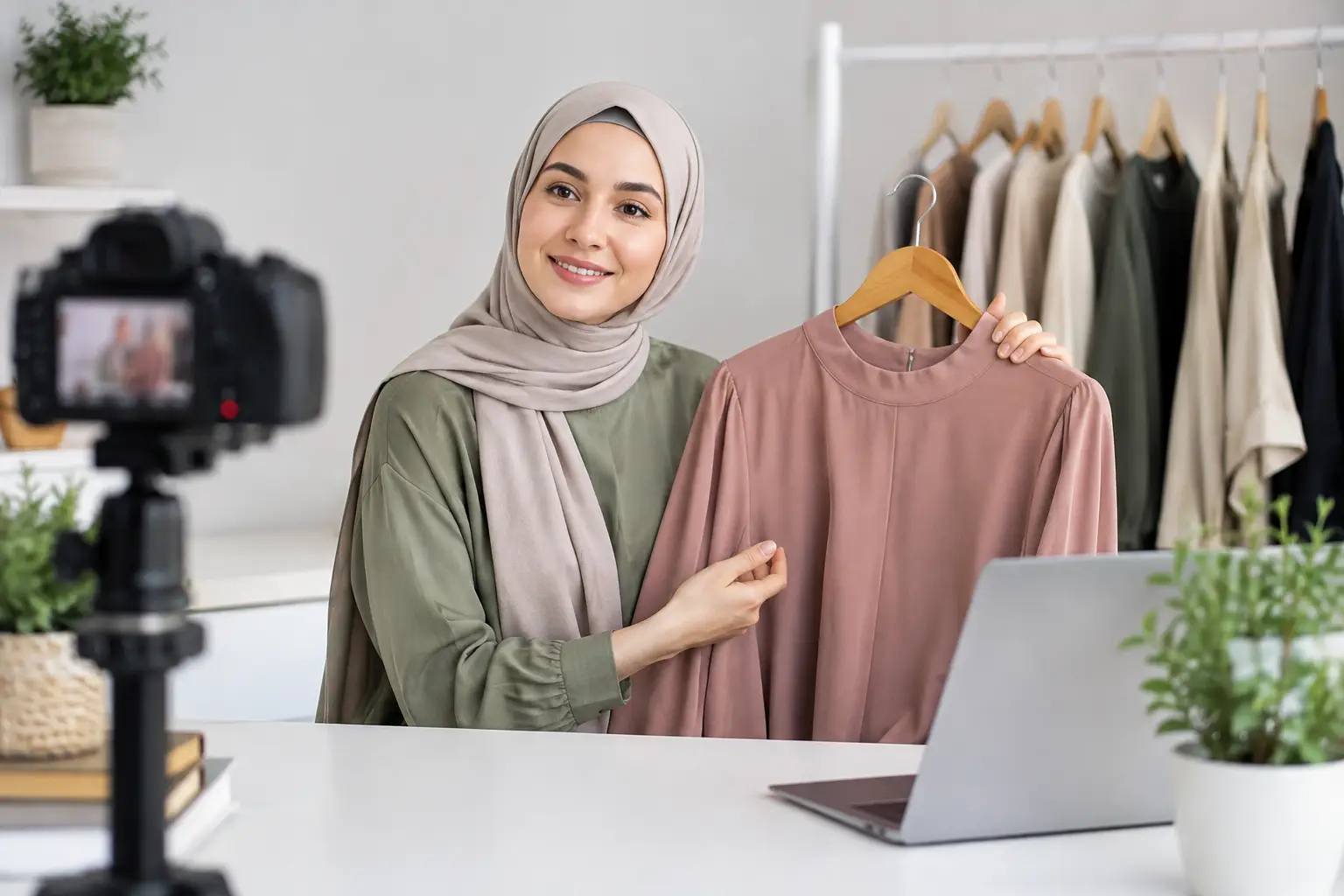
A modest dress can look polished in a studio photo and still fail to answer the question that drives a purchase: Will this work for me? Modest fashion creators close that gap. They show how fabric sits over layers, whether a sleeve stays in place during a busy day, how an outfit moves with a hijab, and what a brand looks like in the real lives of Muslim women.
For halal and Muslim-owned fashion brands, that context is not a nice extra. It is the sales argument. Customers are not only buying a silhouette. They are assessing coverage, comfort, styling range, values, and whether the person recommending it understands the same standards they do.
Why modest fashion needs credible creators
Mainstream fashion influencer marketing often treats modest wear as a visual category. A creator wears the product, posts an outfit shot, tags the brand, and moves on. That can create awareness, but it leaves too much unsaid for a customer making a considered purchase.
A culturally fluent Muslim creator can explain the details without turning content into a lecture. She may show a tunic with different bottoms, style a dress for work and Eid, test opacity in daylight, or explain why a garment works for a woman who wears hijab. The content feels useful because it comes from lived experience.
That credibility matters most when a brand is asking customers to try something unfamiliar: a new abaya cut, a premium fabric, a small-batch collection, a higher price point, or a fit designed for a specific modesty preference. Buyers need proof that goes beyond a product page.
The same principle applies across the audience. Some followers want fully covered looks. Others dress modestly for faith, comfort, professional settings, or personal style. Good modest fashion creators do not flatten those differences. They know their audience and present products honestly within that point of view.
What creators can show that product pages cannot
A strong campaign does more than generate attractive images. It reduces the uncertainty that keeps shoppers from adding to cart. The best creator content is specific enough to answer real objections, while still feeling native to the creator's feed.
For a clothing brand, useful proof often includes fabric weight, layering options, fit across body types, movement, garment length, care, and ways to rewear the item. For hijab and accessory brands, it can include grip, coverage, drape, color matching, and whether the product holds up through a full day.
This is where product gifting can be valuable, especially for an early-stage brand. Send a clear brief, but leave room for the creator to identify the practical details their followers actually care about. A creator who regularly wears modest fashion will often spot the strongest angle faster than a general lifestyle influencer.
There is a trade-off. Too little direction can produce beautiful content with no commercial purpose. Too much scripting can make a personal recommendation sound like an ad read. The answer is not a longer brief. It is a sharper one: define the product claim, the customer problem, the required disclosure, the key deliverable, and what cannot be misrepresented.
Choosing modest fashion creators for fit, not vanity metrics
Follower count is useful for estimating reach. It is not enough to predict sales. A creator with 15,000 followers who consistently starts conversations about fit, hijab styling, and ethical purchasing may be a stronger match than a much larger account with broad fashion content and a loosely connected audience.
Start with the customer you need to reach. Is she a working professional who wants polished layers? A college student looking for accessible styling? A mother shopping for occasionwear? A new hijabi building a wardrobe? A modest dresser who does not identify as Muslim but values the same product benefits? These are different audiences, even when they buy from the same category.
Then review the creator's content as a customer would. Look beyond a polished feed. Read comments. Notice what followers ask, whether the creator answers them, and whether recommendations lead to genuine discussion. Check the audience geography if you sell primarily in the United States, Canada, or the United Kingdom. A large following outside your shipping markets may build brand recognition without delivering efficient acquisition.
Four checks matter before you send product or sign a paid partnership:
- Audience fit: The creator reaches the type of shopper your product is made for, in the markets you can serve.
- Content fit: Their usual style can show the product clearly, not bury it in an unrelated trend.
- Values fit: They understand halal-aware representation and the boundaries your brand needs respected.
- Commercial fit: Their rates, deliverables, usage expectations, and timeline match the outcome you need.
Values fit should be handled professionally, not vaguely. If your brand cannot appear alongside certain products, messages, or partnerships, say so early. If a creator has non-negotiable boundaries around music, styling, image use, or product categories, respect those too. Clear terms protect both sides and prevent last-minute revisions.
Build campaigns around a buying moment
The strongest modest-fashion campaigns are tied to a reason to shop. Ramadan and Eid are obvious examples, but they are not the only ones. Back-to-school, wedding season, workwear refreshes, travel, cold-weather layering, and new-hijab journeys all create real customer needs.
A campaign should identify one buying moment and one primary action. If you are launching a collection, the goal may be qualified awareness and waitlist sign-ups. If inventory is ready, it may be sales of a hero product. If you are testing positioning, it may be learning which fit or styling message earns the most saves, clicks, and questions.
Trying to do all three in one creator post usually weakens it. Give each piece of content a job.
For example, a short video may show three ways to style one dress for work, dinner, and Jummah. A story sequence can answer sizing and fabric questions, then direct viewers to a limited collection. A follow-up post can share how the item performed after wear, which is especially effective for products that make durability or premium-quality claims.
Paid usage is another decision to make upfront. If a creator makes a high-performing video, you may want to run it as paid social or use it on your product page. That is not automatically included in a creator fee. Agree on usage scope, duration, platforms, and editing rights before content is made. A lower upfront rate with no usage rights may be more expensive than a higher rate that gives you a usable performance asset.
Make measurement practical
Creator marketing is easier to improve when each campaign has a simple measurement plan. Use a unique code, trackable destination, or dedicated landing page when possible. Then compare results by creator and by content format rather than treating the campaign as one blended result.
Sales are the clearest signal when tracking is available, but they are not the only signal worth watching. Saves can indicate that styling content has lasting value. Comments can reveal unanswered fit objections. High video completion may show that the hook and product demonstration worked. A spike in branded search can mean the creator built demand that does not appear in a direct-click report.
Do not judge every partnership after 24 hours. Some modest fashion purchases take time, particularly for higher-priced pieces or seasonal wardrobes. At the same time, do not let vague awareness become an excuse for weak reporting. Set a review window, collect the results, and decide whether to repeat, refine, or stop.
For brands running several partnerships, the operational work adds up quickly: finding creators, checking audience fit, negotiating rates, approving concepts, managing contracts, tracking delivery, and handling payment. Hadyah can manage that process for halal brands that need a coordinated campaign without building an internal creator-operations team.
Give creators room to sound like themselves
The most persuasive creator content rarely starts with a brand slogan. It starts with a familiar problem: sleeves that ride up, dresses that need too many layers, hijabs that slip, occasionwear that photographs well but feels uncomfortable, or basics that do not survive repeated washing.
Your job is to make sure the product claims are accurate and the campaign requirements are clear. The creator's job is to translate those facts into language their audience recognizes. That division of labor is why the partnership works.
When you choose creators who already understand modest dressing and Muslim consumer expectations, you spend less time explaining the basics and more time making content that helps someone buy with confidence. That is a better use of a product sample, a campaign budget, and a customer's attention.
Want creators matched to your brand?
Hadyah connects halal brands with verified Muslim creators — with clear terms and protected payments.
Keep reading
Influencer marketing · October 15, 2026
Muslim Influencers for Halal Brands That Fit
Muslim influencers for halal brands help you reach trusted Western Muslim buyers. Choose creators with real fit, clear terms, and measurable sales goals.
Read more
Influencer marketing · October 14, 2026
How to Find Muslim Influencers for Your Brand
Learn how to find Muslim influencers with real audience trust, cultural fit, and campaign terms that protect your halal brand and drive measurable sales.
Read more