Influencer marketing · October 12, 2026 · 6 min read
How a Verified Influencer Platform Protects Halal Brands
A verified influencer platform helps halal brands find Muslim creators with audiences, safer partnerships, and campaigns built to drive measurable sales.
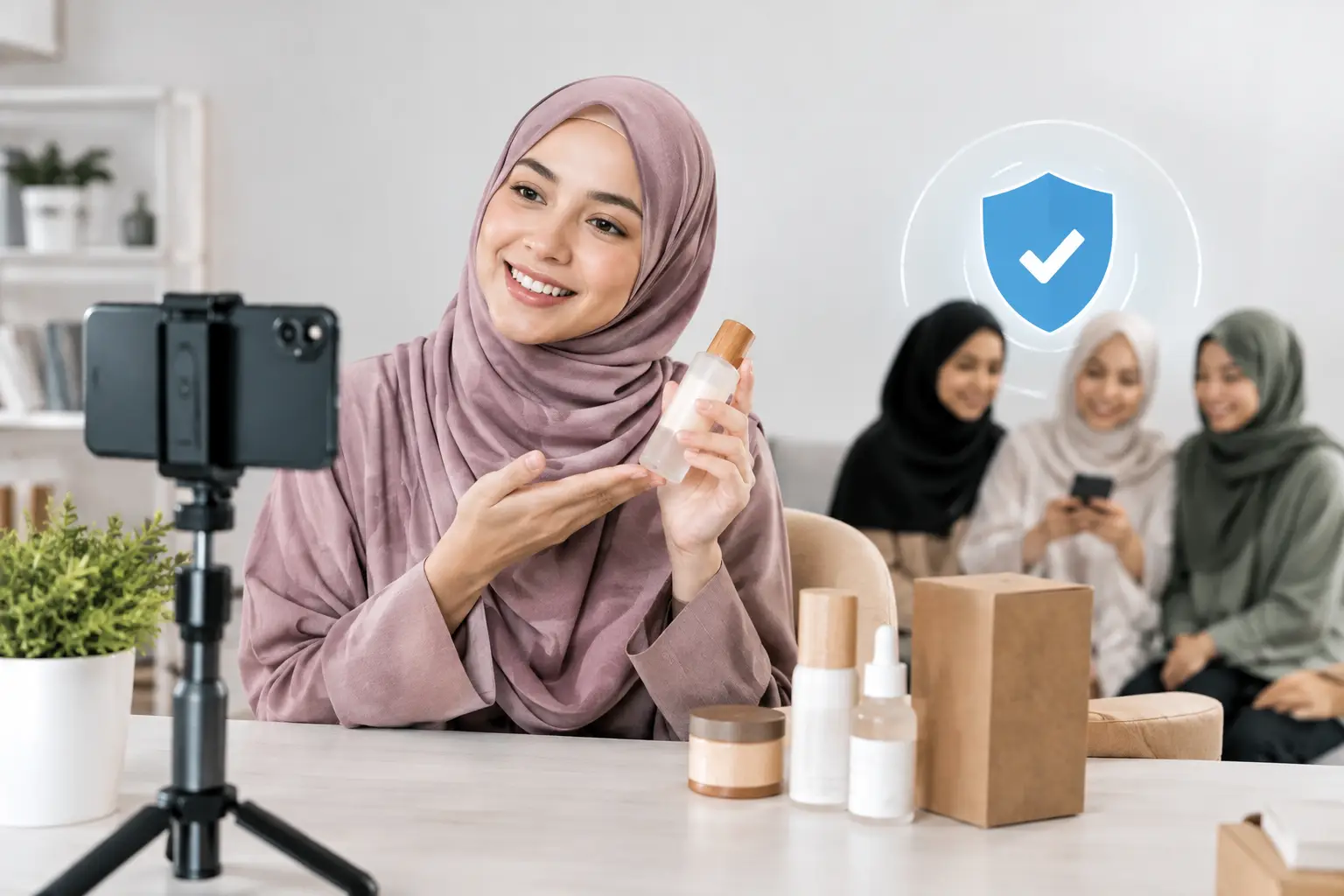
A creator can have a polished feed, strong engagement, and a large following - then turn out to be the wrong fit for your brand before the first post goes live. For halal businesses, that risk is bigger than a weak campaign result. The wrong partnership can put your product beside content, claims, or values your customers do not accept. A verified influencer platform gives Muslim brands a better starting point: real creators, checked audiences, and a clearer path from brief to approved content.
That does not mean every campaign should be fully managed or every creator needs celebrity-level reach. It means the people representing your business should be credible to the audience you want to reach, and the campaign process should not create avoidable work for your team.
Why broad creator databases fall short
Most influencer databases are built for volume. They let you filter by age, location, category, and follower count, then hand you thousands of profiles. That may work for a mass-market product with broad positioning. It is less useful when cultural fit is part of the product promise.
A halal snack company may need creators who can speak naturally about ingredient standards and family routines. A modest-fashion brand may need content that feels current without treating faith as a costume. An Islamic education business needs creators whose audience already trusts them on religious or parenting decisions. None of that appears reliably in a generic interest filter.
The issue is not that Muslim creators are a single audience. They are not. Western Muslim consumers vary by generation, background, income, language, observance, and what they expect from brands. But they can quickly spot when a campaign was built by someone who does not understand the context.
A broad platform also leaves your team to do the hard part alone: checking audience quality, reviewing past partnerships, understanding content boundaries, negotiating rates, writing a usable brief, and chasing deliverables. The search looks simple. The operational work is not.
What a verified influencer platform should verify
"Verified" can be an empty label if it only means a creator confirmed an email address. For a halal brand, verification should help answer practical questions before you send product or spend budget.
The creator is real and active
Start with the basics. Is this a working creator who consistently publishes content? Does their recent content match the category they are pitching? Are comments relevant and human, or does engagement look disconnected from their stated audience size?
Follower count is not the decision. A smaller Muslim parenting creator with an involved audience may drive more qualified orders than a large lifestyle account whose followers have little reason to care about your product. Reach matters, but relevance converts.
The audience is credible
Audience verification should look beyond a headline number. You need a reasonable view of where followers are located, whether the audience aligns with your market, and whether engagement patterns make sense for the account.
For a US launch, a creator with an engaged audience in the United States, Canada, and the United Kingdom may be more useful than an account with a larger global following. If you sell only in the US, international reach can inflate the apparent opportunity without adding customers.
This is also where brands should be candid about their goal. If you need awareness, broader reach may be enough. If you need sales, prioritize audience geography, content format, prior conversion performance where available, and the creator's ability to show your product in a believable use case.
The creator understands halal brand boundaries
Cultural fit is not a box to check after you have selected a creator. It affects the entire campaign: how the product is described, what appears in the background, which music or visual styles are used, how claims are framed, and what other sponsors may appear near your post.
A creator who understands Muslim audiences will not need a long explanation of why certain pairings are off limits. They will also know how to make the content feel normal rather than overly careful or scripted. That is the difference between brand safety as restriction and brand safety as fluency.
The collaboration terms are clear
Creators should be able to state whether they accept product-only collaborations, paid partnerships, affiliate arrangements, or a mix of these options. Brands should know what they are receiving: the number of posts, formats, usage rights, timeline, revision expectations, and payment terms.
Ambiguity is expensive. A gifted product can be a sensible test for a lean startup, but only when expectations are honest and the creator actually wants the product. A paid campaign gives you more defined deliverables and usually more control, but it should still leave room for the creator's voice. Over-scripted content often performs like an ad because it is one.
Verification is the start, not the campaign plan
A verified roster saves time. It does not replace campaign strategy. Brands still need to decide what success looks like before outreach begins.
If your goal is first-time awareness, you may want several creators posting within a concentrated period so customers see the brand more than once. If your goal is product validation, work with a smaller group across distinct audience segments and compare what messages earn comments, saves, clicks, and purchases. If your goal is seasonal sales, build the offer and inventory plan before creators receive their briefs.
The strongest briefs are short but specific. Explain the product, the customer problem, the required claims, the claims that must not be made, and the action you want viewers to take. Include practical details that prevent delays: shipping timeline, discount code, key dates, approval process, and who owns final sign-off.
Then give the creator room to create. They know whether a kitchen demonstration, a family routine, a direct review, or a humorous skit will make sense to their audience. Your job is to protect the facts and the brand. Their job is to make the message worth watching.
Choose the execution model that matches your team
There is no prize for managing a campaign yourself if your team does not have the time. There is also no need to pay for full-service support when you have a clear process and only need access to suitable creators.
A self-serve marketplace makes sense when your team can review profiles, manage conversations, approve content, and handle follow-up. It gives you direct control and can be an efficient option for a product seeding test or a focused one-creator collaboration.
Managed support makes more sense when the campaign involves multiple creators, a product launch, sensitive messaging, or tight deadlines. In that model, someone should handle creator matching, rate negotiation, briefs, contracts, payment, reminders, revisions, and final delivery. Your team should be making decisions, not sending the fourth follow-up message for a missing draft.
Hadyah is built around that choice: access vetted Muslim creators directly, or send one brief and have the campaign managed from selection through delivery. The creators are the same. The difference is how much execution your team wants to own.
Watch for the mistakes verification cannot prevent
Even a well-vetted creator partnership can underperform. The common problems are usually campaign problems, not creator problems.
The first is choosing based on follower count alone. The second is asking one post to do everything: introduce the brand, explain a complex product, overcome objections, and drive immediate purchase. The third is measuring only likes when the real business goal is email signups, code redemptions, sales, or usable content assets.
Set expectations that fit the channel. A short-form video can create discovery quickly. It may not explain a complicated Islamic finance product without a follow-up asset or a landing page built for questions. A creator can make a personal-care item feel trustworthy, but your checkout, offer, and shipping experience still determine whether that trust becomes revenue.
Track the campaign at the creator level. Use unique codes or landing pages where appropriate. Record publishing date, content format, views, comments, saves, clicks, code use, and sales. Also note the qualitative signal: what questions did people ask, what objections came up, and which phrases did audiences repeat? Those details often improve the next campaign more than a single top-line metric.
A good verified influencer platform reduces the guesswork at the front of the process. The rest comes down to clear goals, honest creator fit, and a campaign workflow your team can actually sustain. Start with the audience that already understands your values, then give the right creator a message they can make their own.
Want creators matched to your brand?
Hadyah connects halal brands with verified Muslim creators — with clear terms and protected payments.
Keep reading
Influencer marketing · October 15, 2026
Muslim Influencers for Halal Brands That Fit
Muslim influencers for halal brands help you reach trusted Western Muslim buyers. Choose creators with real fit, clear terms, and measurable sales goals.
Read more
Influencer marketing · October 14, 2026
How to Find Muslim Influencers for Your Brand
Learn how to find Muslim influencers with real audience trust, cultural fit, and campaign terms that protect your halal brand and drive measurable sales.
Read more